
September 3, 2026 – September 11, 2026
Peru Perú秘鲁 Perú
A solo trip through Peru: Lima's coast, Cusco and the Sacred Valley, Machu Picchu, and the Amazon rainforest outside Puerto Maldonado.一个人的秘鲁旅行:利马的海岸、库斯科与圣谷、马丘比丘,以及亚马逊雨林。
Travel itinerary旅行行程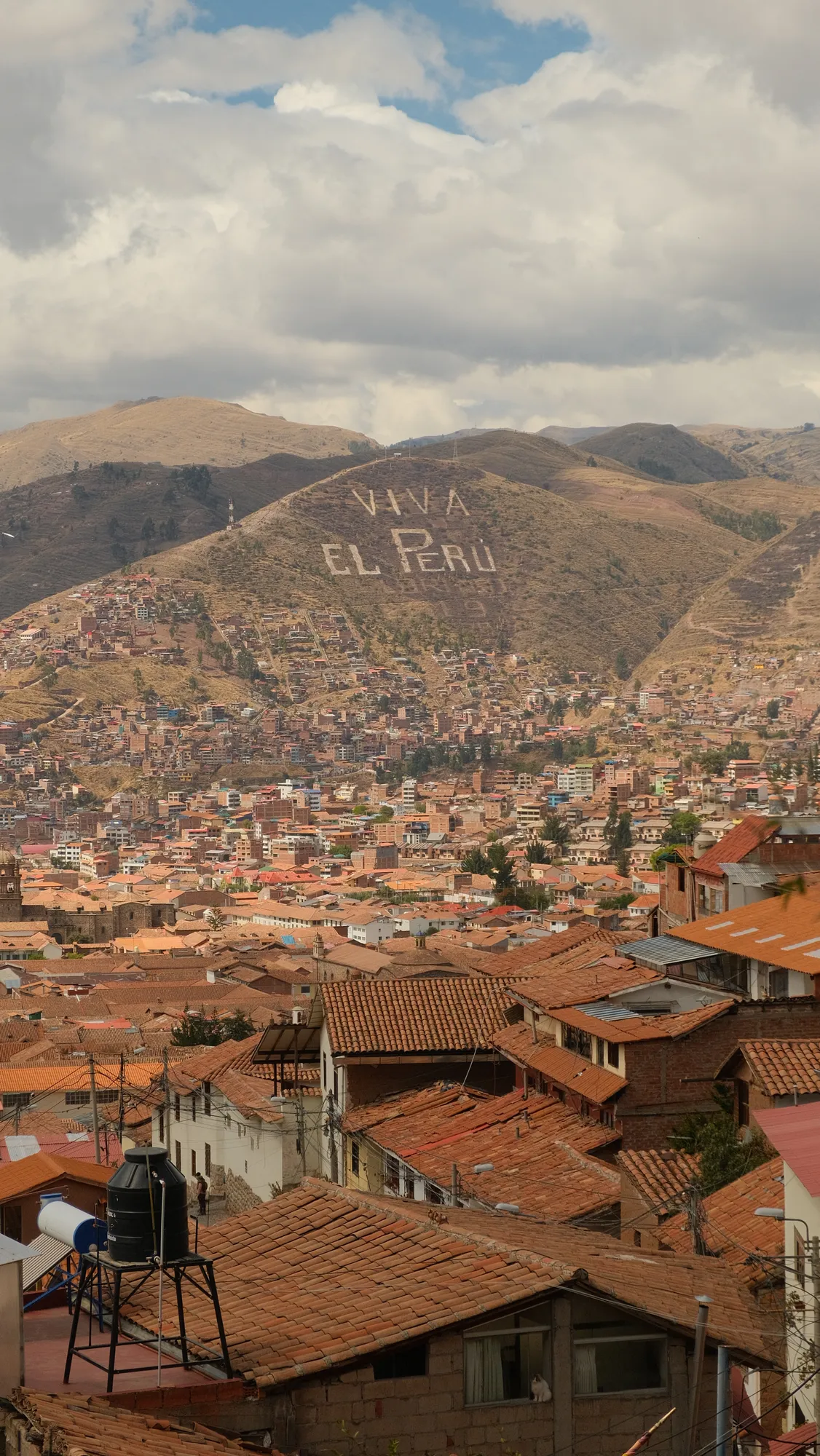
☼ Peru · Perú☼ 秘鲁 · Perú · My first solo trip第一次独旅
From the Pacific to the Amazon从太平洋到亚马逊
September 3–11, 20262026 年 9 月 3–11 日
- Lima利马
- Cusco库斯科
- Sacred Valley圣谷
- Machu Picchu马丘比丘
- Puerto Maldonado马尔多纳多港
My first solo journey in South America, from the coast of Lima up into the highlands and down into the rainforest. Up in the Andes, the thin air and endless sky felt like they rinsed something clean in me. The markets overflowed with more kinds of corn, potatoes and fruit than I knew existed. I set out to travel alone, yet every day brought a chance meeting with someone wonderful.第一次在南美独自旅行,从利马的海边,一路走上高原,再走进雨林。安第斯山上,稀薄的空气和辽阔的天空,像把心里的什么洗得干干净净;集市里堆满了我从没见过的玉米、土豆和水果。本以为是一个人的旅程,却每天都有一场意外的相遇。
I
The Coast海岸
Lima利马
A little nervous before leaving — and every worry gone at first sight of the Pacific. Lima opens along the cliffs: Miraflores facing the wide water, historic Barranco with its old villas, bridges and murals, and the city rising inland behind the sea air.出发前带着一点忐忑,第一次望见太平洋时便全消散了。利马沿着海岸悬崖展开:米拉弗洛雷斯面向无边海面,历史悠久的巴兰科有老别墅、桥与壁画;咸湿的海风身后,是不断向内陆延伸的城市。
Miraflores · The cliffs米拉弗洛雷斯 · 海崖
Lima’s Miraflores district stands on cliffs high above the Pacific. Below them, the Costa Verde road and its pebble beaches follow the bay, and every clear evening the clifftop parks fill with people watching the sun go down.利马的米拉弗洛雷斯区坐落在高出太平洋的海崖之上。崖下,绿色海岸公路和卵石海滩沿着海湾延伸;每个晴朗的傍晚,崖顶的公园里都坐满了看日落的人。
Barranco & the old centre巴兰科与老城
Barranco, once a seaside retreat for Lima’s wealthy families, is now the city’s artists’ quarter: old villas, the Bridge of Sighs and murals on almost every wall. Inland, the historic centre, founded by Francisco Pizarro in 1535 as the “City of Kings”, keeps its carved balconies and colonial towers.巴兰科曾是利马富人的海滨度假地,如今是这座城市的艺术街区:老别墅、叹息桥,几乎每面墙上都有壁画。往内陆走,是 1535 年由弗朗西斯科·皮萨罗建立、被称为“诸王之城”的历史中心,雕花木阳台与殖民时期的塔楼依旧还在。
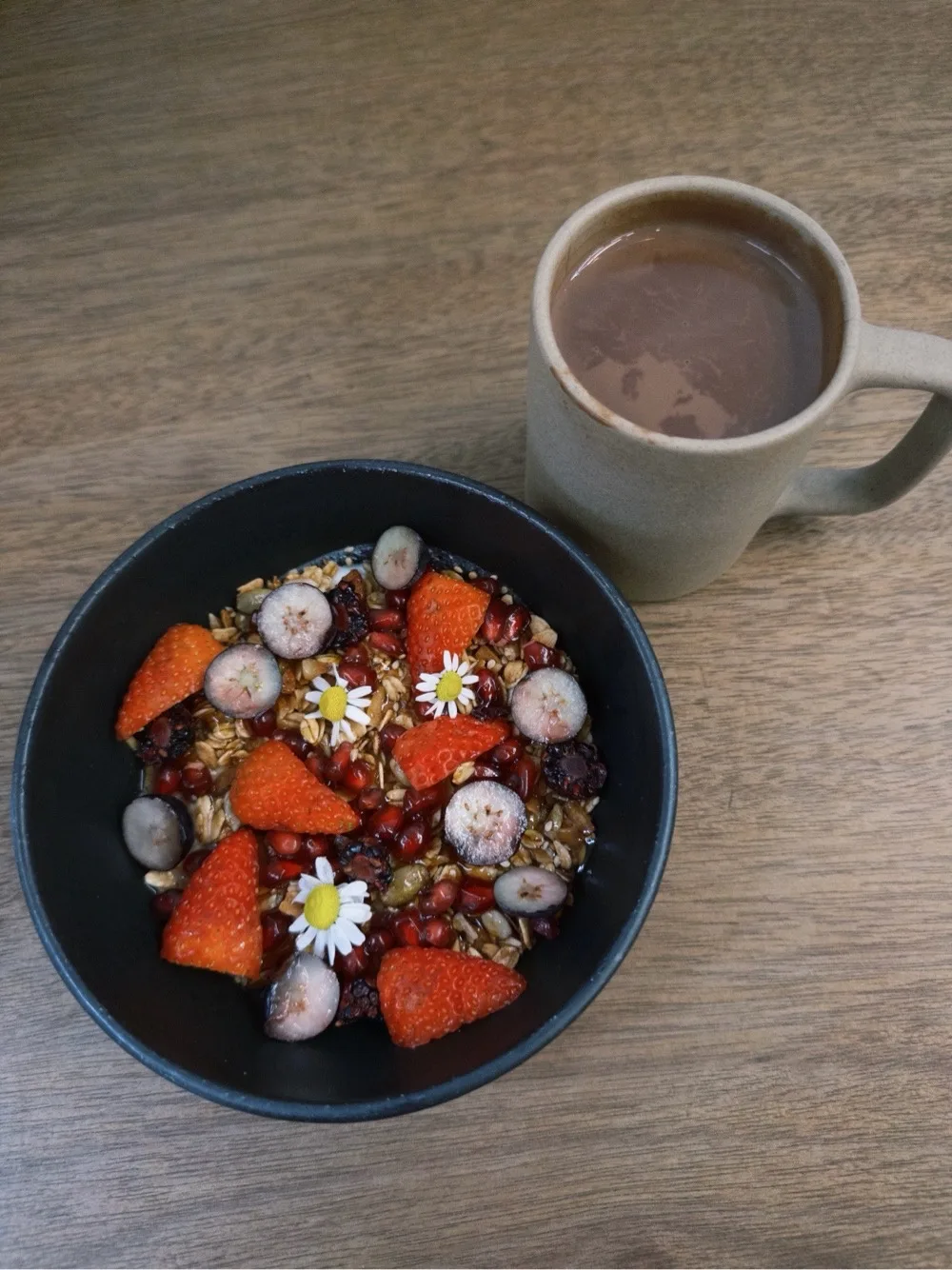 Recommended café · Barranco推荐咖啡馆 · 巴兰科At Demo in Barranco, a fruit bowl and a deep hot chocolate made the morning feel briefly like a European Christmas market — even with Lima’s murals and sea air just outside.巴兰科的 Demo,一碗水果和一杯浓厚热巧克力,让早晨短暂有了欧洲圣诞市集的感觉;门外却仍是利马的壁画和海风。Open on the Food page →在美食页打开 →
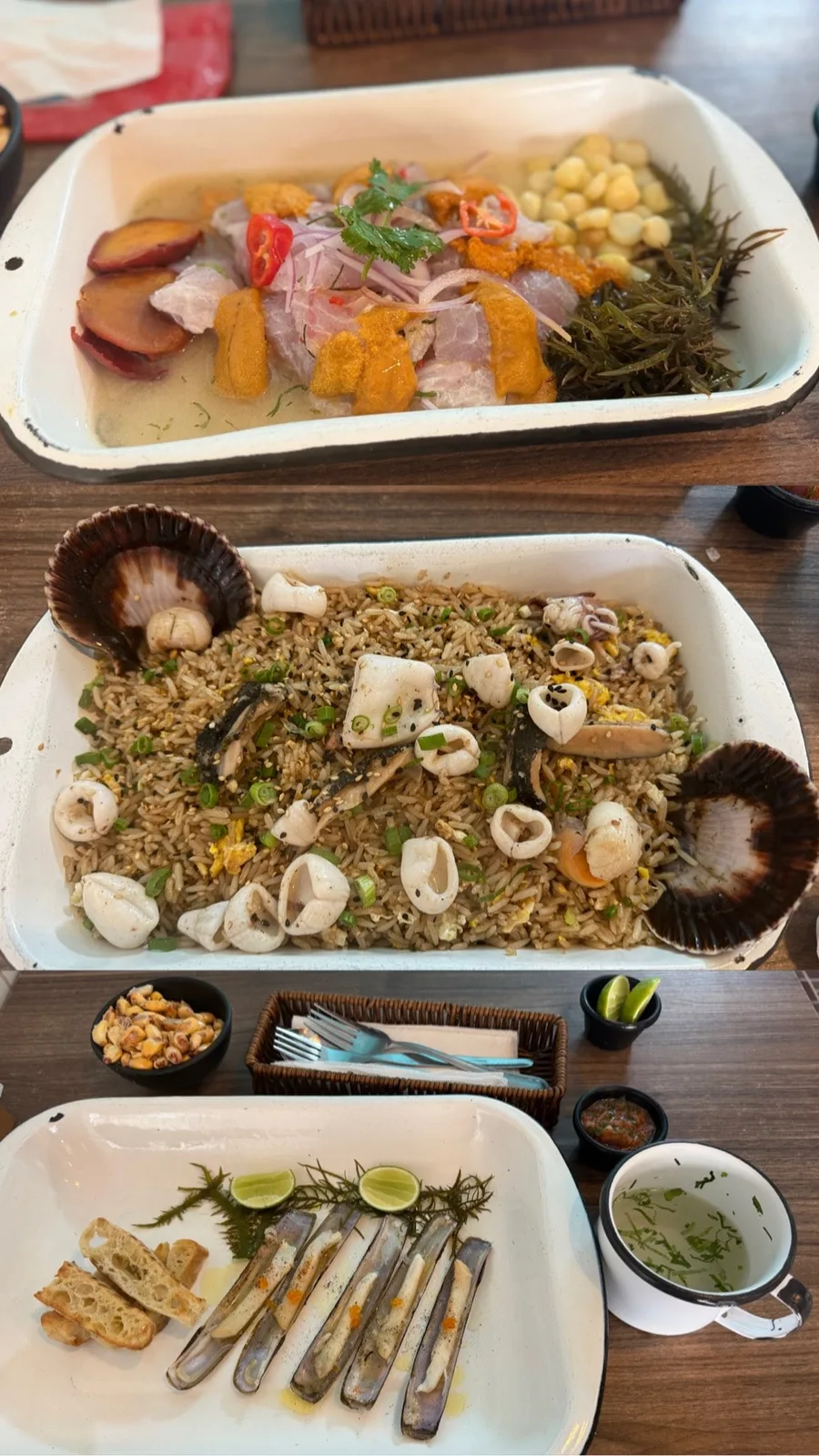 Recommended restaurant · Lima seafood market推荐餐厅 · 利马海鲜市集At Mercado Cevichero, choose the fish by weight and let the kitchen turn the morning catch into ceviche. It is generous, very fresh, and best shared with someone across the table.在 Mercado Cevichero,按重量挑当天的鱼,再交给厨房做成酸橘汁腌鱼。新鲜、丰盛,最适合和坐在对面的人一起分享。Open on the Food page →在美食页打开 →
II
Thin Air高原
Cusco库斯科
At 3,400 metres, the first thing Cusco teaches is to slow down: steep streets taken one breath at a time, and a city best understood from above. From the overlooks it is a bowl of terracotta roofs climbing the hills, with “Viva el Perú” spelled out in white stone on the slope beyond. Here I met an Australian vet who was also travelling alone.海拔三千四百米,库斯科教会人的第一件事,是放慢脚步:陡峭的街道,一口气一口气地走;这座城,要从高处看才看得懂。从观景台望去,红瓦屋顶铺满整个山谷,一路爬上山坡;对面的山坡上,白色石块拼出“Viva el Perú”。在这里,我遇到了一位同样独自旅行的澳大利亚兽医。
Rooftops屋顶
Almost every roof in the old city is laid with the same clay tiles, brought by the Spanish and set on walls that are often Inca below and colonial above. Beyond them, newer neighbourhoods keep climbing the slopes.老城里几乎每一片屋顶,都铺着同样的陶土瓦。瓦是西班牙人带来的,下面的墙,常常下半截是印加的、上半截是殖民时期的。再往外,新的街区一直爬上山坡。
San Blas圣布拉斯
San Blas, the artisans’ quarter, climbs steeply from the centre: whitewashed houses with blue doors and balconies, small workshops, and stairways that suddenly open onto the whole city.圣布拉斯是工匠聚居的街区,从市中心陡然向上:白墙蓝门、蓝色阳台、小小的作坊,还有一段段石阶,走着走着,整座城突然在眼前铺开。
Markets & courtyards集市与庭院
Peru grows thousands of potato varieties and dozens of kinds of native corn, and the markets show it: sacks of maíz sorted by colour and by use. In a colonial courtyard, two llamas kept the lawn short.秘鲁有数千种土豆、几十种原生玉米,集市上一目了然:一袋袋玉米按颜色和用途分好。一座殖民时期的庭院里,两只羊驼负责把草坪啃得整整齐齐。
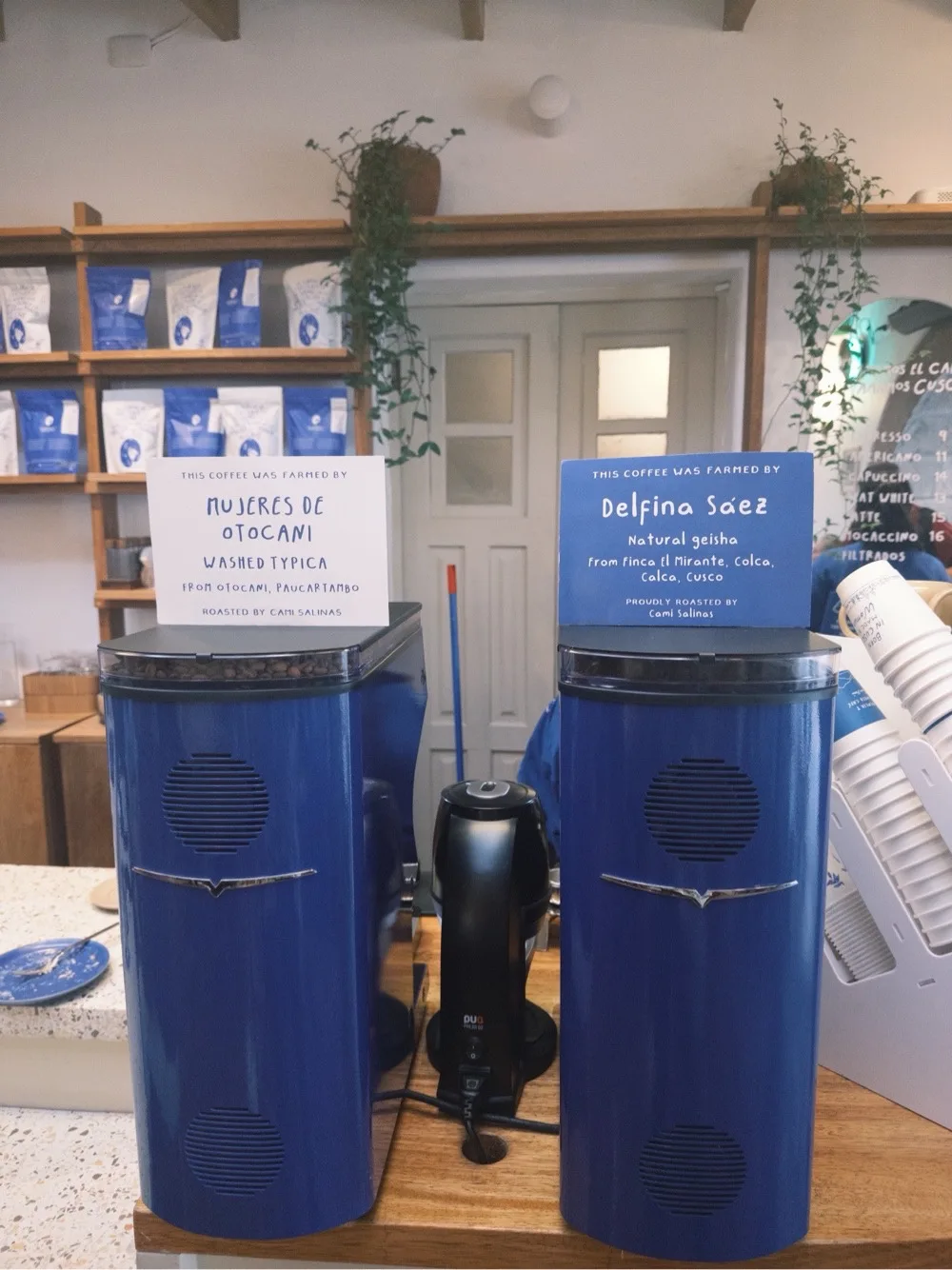 Recommended café · Cusco推荐咖啡馆 · 库斯科Florencia y Fortunata is a women-owned café where each cup begins with a woman coffee farmer. I loved the clean filter coffee and its bright blue mug — a small, direct line from the highlands to the table.Florencia y Fortunata 是一家由女性经营的咖啡馆,每一杯咖啡都来自女性咖啡农。我很喜欢干净的手冲和那只亮蓝色的杯子——从高原到桌面,一条小而直接的连接。Open on the Food page →在美食页打开 →
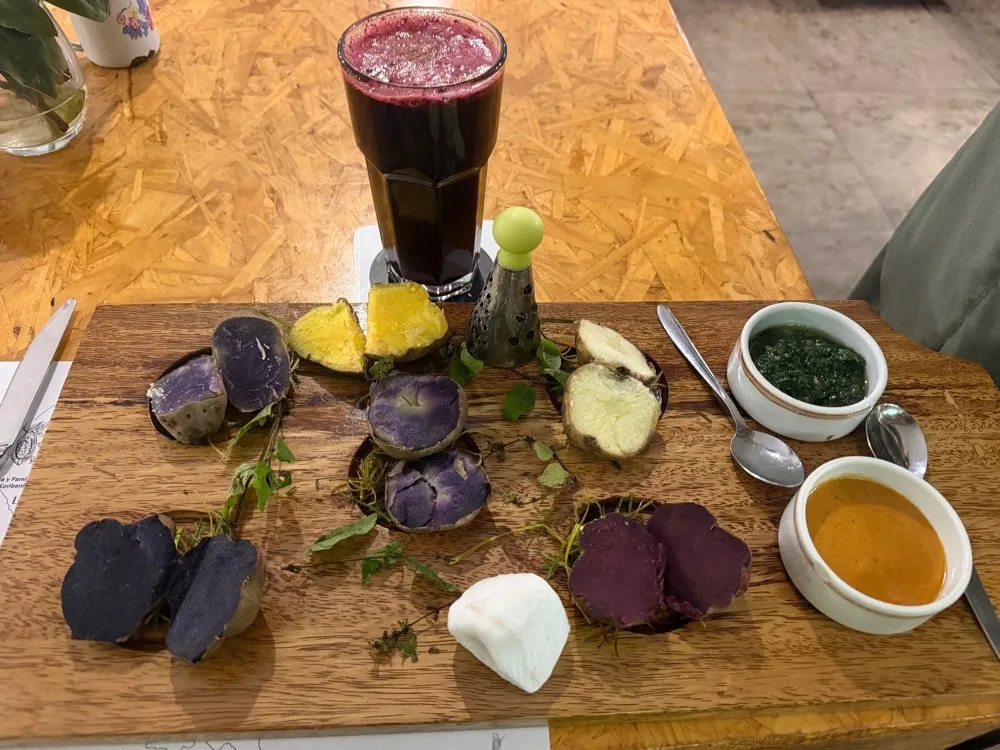 Recommended restaurant · Cusco推荐餐厅 · 库斯科Nuna Raymi: farm to table, with ingredients from the Sacred Valley. An Andean table of alpaca tenderloin, causa cevichada and a parade of native potatoes; I loved their coffee and the potato experience.Nuna Raymi:从农场到餐桌,食材来自圣谷。一桌安第斯风味:羊驼里脊、酸橘汁土豆泥卷,还有一整排原生土豆;很爱他们的咖啡和土豆品鉴。Open on the Food page →在美食页打开 →
Toda mi ambición es ser libre toda mi vida.
III
The City of Stone石之城
Cusco · Qorikancha · Sacsayhuamán库斯科 · 太阳神殿 · 萨克塞瓦曼
Cusco was once the heart of an empire, linked by mountain roads and relay runners. In a narrow lane, the Twelve-Angled Stone, part of Inca Roca’s palace wall, still fits its neighbours without mortar, its joints unbroken by centuries of earthquakes. At the Qorikancha, the Temple of the Sun, Inca walls once sheathed in gold now carry a Spanish church on their shoulders; from here, sight lines once ran out across the valley to mark the sun’s turning points. Above the city, Sacsayhuamán looks at first like fallen boulders, then resolves into ramparts, terraces and water channels, and each June, at the winter solstice, Inti Raymi returns to its stones.库斯科曾是一个帝国的心脏,山路与接力信使把它与四方相连。窄巷里,十二角石是印加罗卡王宫墙的一部分,不用灰浆,与周围的石块依旧严丝合缝,几百年的地震也没能撼动。太阳神殿科里坎查,曾经包覆黄金的印加石墙,如今托着一座西班牙教堂;当年,从这里延伸出的视线遍布山谷,标记着太阳的转折点。城外山上的萨克塞瓦曼,乍看像散落的巨石,细看才是城墙、梯田与水渠;每年六月冬至,太阳节“因蒂莱米”仍会重回这些石头之间。
Plaza de Armas武器广场
The Spanish laid out the Plaza de Armas over the great Inca square of Huacaypata and raised their churches on Inca foundations. The Jesuits built the Compañía de Jesús so grandly that it was said to rival the cathedral beside it.西班牙人在印加大广场瓦卡伊帕塔的原址上建起武器广场,又把教堂筑在印加的石基之上。耶稣会修建的耶稣会教堂极尽华丽,据说足以与一旁的主教座堂一较高下。
IV
The Sacred Valley圣谷
Pisac · Moray · Ollantaytambo皮萨克 · 莫赖 · 奥扬泰坦博
Below Cusco, the land drops into a green valley cut by the Urubamba, warmer and softer than the city above, where the Inca grew the corn that fed an empire. Here the past isn’t behind glass. It is planted, celebrated and walked through every day.从库斯科往下,大地沉入一道被乌鲁班巴河切开的绿色山谷,比山上的城温暖、柔和许多;印加人曾在这里种出养活一个帝国的玉米。在这里,过去不在玻璃柜里,而是被耕种、被庆祝,每天被人走过。
Pisac皮萨克
In Pisac, terraces climb the mountain above a market town, and on Sundays families come down from the surrounding communities in their own woven dress. One morning, a wedding spilled out of the church in woven sashes and flower petals; one evening, I sat in a cacao ceremony, warm and bitter in the cup, and let the day go quiet.在皮萨克,梯田沿着集镇上方的山坡层层攀升;每逢周日,周边社区的人家穿着自己村子的织布衣裳下山赶集。一个上午,一场婚礼从教堂里涌出来,新人系着编织腰带,花瓣漫天;一个傍晚,我参加了一场可可仪式,杯中温热微苦,一天就这样安静下来。
Chinchero · Weavers钦切罗 · 织女
Chinchero, at almost 3,800 metres, is known for its weaving cooperatives. Women still spin alpaca wool by hand and dye it with plants, insects and minerals, cochineal for red and indigo for blue, before weaving the patterns of their community.海拔近三千八百米的钦切罗,以织布合作社闻名。妇女们至今仍手工纺羊驼毛,用植物、昆虫和矿物染色——胭脂虫染红,靛蓝染蓝——再织出属于自己社区的图案。
Moray莫赖
At Moray, terraces sink some thirty metres into the earth in perfect rings, each level holding its own small climate. Many believe the Inca used them to test and adapt their crops.在莫赖,梯田一圈圈沉进大地,深约三十米,每一层都有自己小小的气候。许多人认为,印加人曾在这里试种、驯化他们的作物。
Maras · The salt pans马拉斯 · 盐田
At Maras, a salty spring is channelled into thousands of small pools stepped down the hillside. The sun evaporates the water and local families harvest the salt by hand, as people here have since before the Inca.在马拉斯,一股咸泉被引入山坡上数千个层层叠叠的小盐池。阳光把水晒干,当地人家用手收盐——早在印加之前,这里的人就这样做了。
Ollantaytambo奥扬泰坦博
At the far end of the valley, Ollantaytambo was a royal estate of Pachacuti, and in 1537 one of the few places where Inca forces defeated the Spanish in battle. It is still lived in, its Inca water channels running beside the streets.山谷尽头的奥扬泰坦博,曾是帕查库特克的王室庄园;1537 年,印加军队在这里打败了西班牙人,是少有的胜仗之一。小镇至今仍有人居住,印加人修的石渠沿着街边流水。
V
Machu Picchu马丘比丘
Machu Picchu马丘比丘
Machu Picchu, likely built for the Inca ruler Pachacuti in the fifteenth century, sets mortarless granite walls, ritual fountains and sun-facing stones into a mountain sanctuary. I walked it with Marje from Hamburg, another solo traveler I’d met that morning, along Circuits 3A and 2A: one stays low among terraces and water channels, the other shows the whole citadel held by the peaks. If you can, climb Huayna Picchu for a view of the city from above.马丘比丘很可能建于十五世纪帕查库特克统治时期:不用灰浆的花岗岩石墙、祭祀水渠和面向太阳的石块,筑成一座山中圣所。那天,我和同样独自旅行、来自汉堡的 Marje 一起走了 3A 与 2A 线路:一条在低处的梯田与水道之间穿行,一条俯瞰群峰环抱下的整座古城。如果可以,推荐登上华纳比丘,从高处回望这座城。
The terraces梯田
Much of Machu Picchu’s engineering is out of sight: deep foundations and layers of crushed stone beneath the terraces drain the heavy rains, which is why the city has not slid off its ridge in five hundred years.马丘比丘的许多工程藏在看不见的地方:梯田之下是深深的地基和一层层碎石,把大雨排走——这也是五百年来,这座城没有从山脊上滑落的原因。
Llamas羊驼
A small herd of llamas lives among the ruins, keeping the grass of the terraces short.一小群羊驼住在遗址里,负责把梯田上的草啃短。
Huayna Picchu & the cloud华纳比丘与云
Huayna Picchu, the peak behind the citadel, has its own temples and stairways cut into the rock. Most mornings the cloud pours over the ridge and lifts slowly, showing the city a piece at a time.古城身后的华纳比丘,山上也有神庙和凿进岩石的石阶。大多数早晨,云从山脊上倾泻下来,又慢慢散开,把这座城一点一点露出来。
In motion · Machu Picchu影像 · 马丘比丘
In motion · A three-day-old llama in the mist影像 · 雾里出生三天的小羊驼
VI
The River雨林
Puerto Maldonado · Tambopata马尔多纳多港 · 坦博帕塔
Puerto Maldonado sits where the Tambopata meets the Madre de Dios: a humid river city whose roads keep becoming water. Named for the explorer Faustino Maldonado and made the capital of Madre de Dios in 1912, it is a threshold more than an ending. From its riverbank, the boat carries you toward Tambopata: canopy, clay banks, oxbow lakes and the patient animal life of the Amazon.马尔多纳多港坐落在坦博帕塔河与马德雷德迪奥斯河交汇处,是一座潮湿的河城,路走着走着便变成了水路。它以探险者福斯蒂诺·马尔多纳多命名,1912 年成为马德雷德迪奥斯大区首府,更像一处入口而非终点。从河岸登船,便驶向坦博帕塔:树冠、黏土河岸、牛轭湖,以及亚马逊耐心藏在暗处的动物。
Into Tambopata进入坦博帕塔
The Tambopata National Reserve protects more than a quarter of a million hectares of lowland rainforest. There are no roads in: the lodges are reached by boat, up a river the colour of clay.坦博帕塔国家保护区守护着二十七万多公顷的低地雨林。没有路可以开进去:去往林中小屋,只能坐船,沿着一条陶土色的河逆流而上。
On the riverbanks河岸上
More than six hundred bird species have been recorded around Tambopata. From the boat: hoatzins, whose chicks climb with claws on their wings; a great potoo pretending to be a branch; jacanas walking across floating plants; a macaw high in a dead tree, and a caiman watching from just below the surface.坦博帕塔一带记录到的鸟类超过六百种。坐在船上就能看到:麝雉——它们的雏鸟靠翅膀上的爪子攀爬;把自己装成一截树枝的大林鸱;在浮草上行走的水雉;枯树高处的一只金刚鹦鹉;还有一条凯门鳄,静静地在水面下看着。
Night夜
Far from any town, the forest goes truly dark at night, dark enough for the Milky Way to stand straight above the palms.远离任何城镇,雨林的夜是真正的黑——黑到银河能笔直地立在棕榈树梢之上。
In motion · The Amazon at sunset影像 · 日落时的亚马逊
Turn on the sound: the Amazon at sunset. Red howler monkeys calling across the canopy, birds settling in, insects rising, and fireflies drifting into the dark.打开声音:日落时的亚马逊。红吼猴的叫声穿过树冠,鸟儿归巢,虫鸣渐起,萤火虫飘进夜色里。
In motion · A red howler on the canopy walk影像 · 树冠栈道上的红吼猴
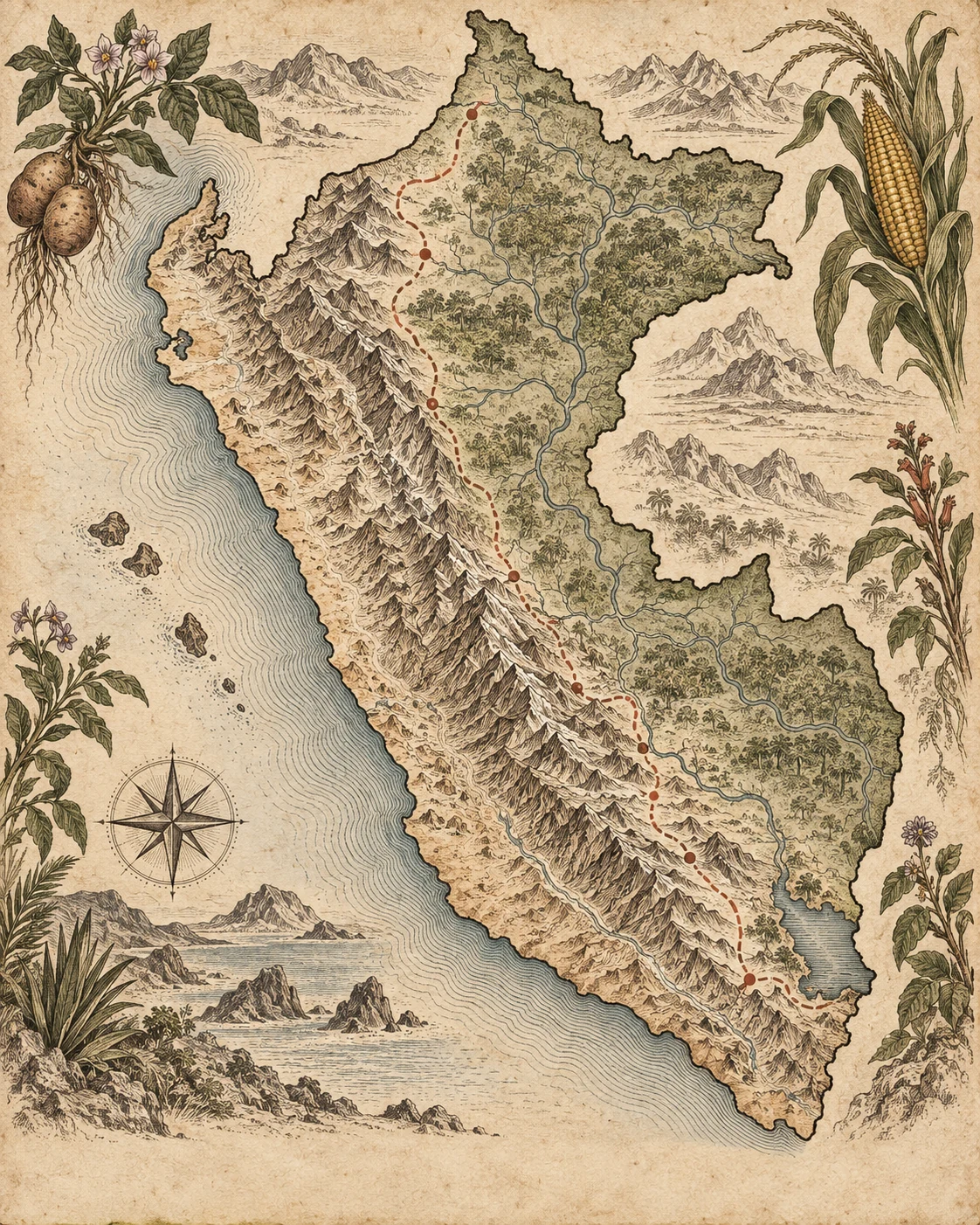
ANDES · CORDILLERA VILCABAMBA13°14′S · 72°32′W
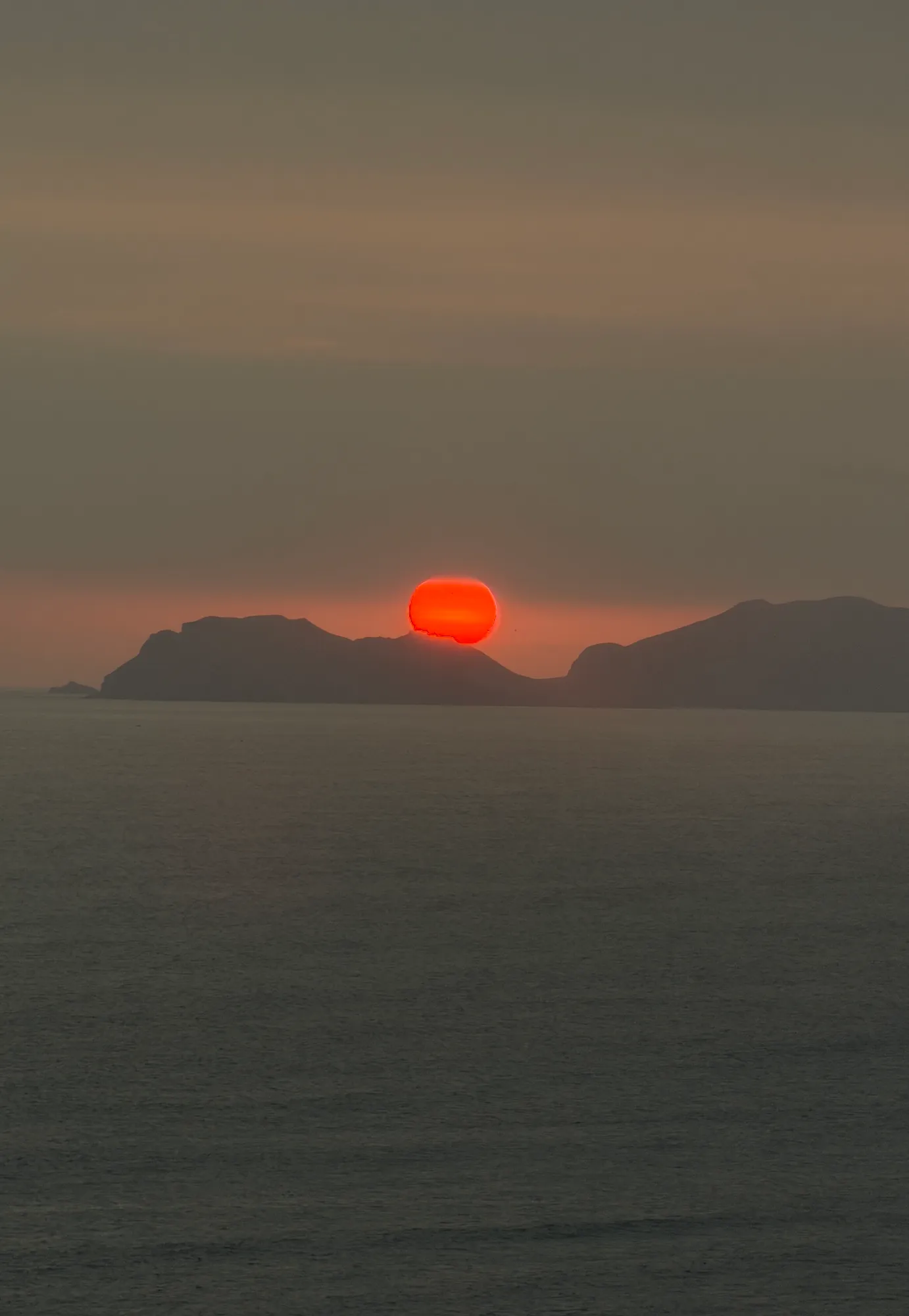
Lima利马 · Lima
8 photos
The Pacific coast where the trip began, cliffs above the sea at Miraflores.
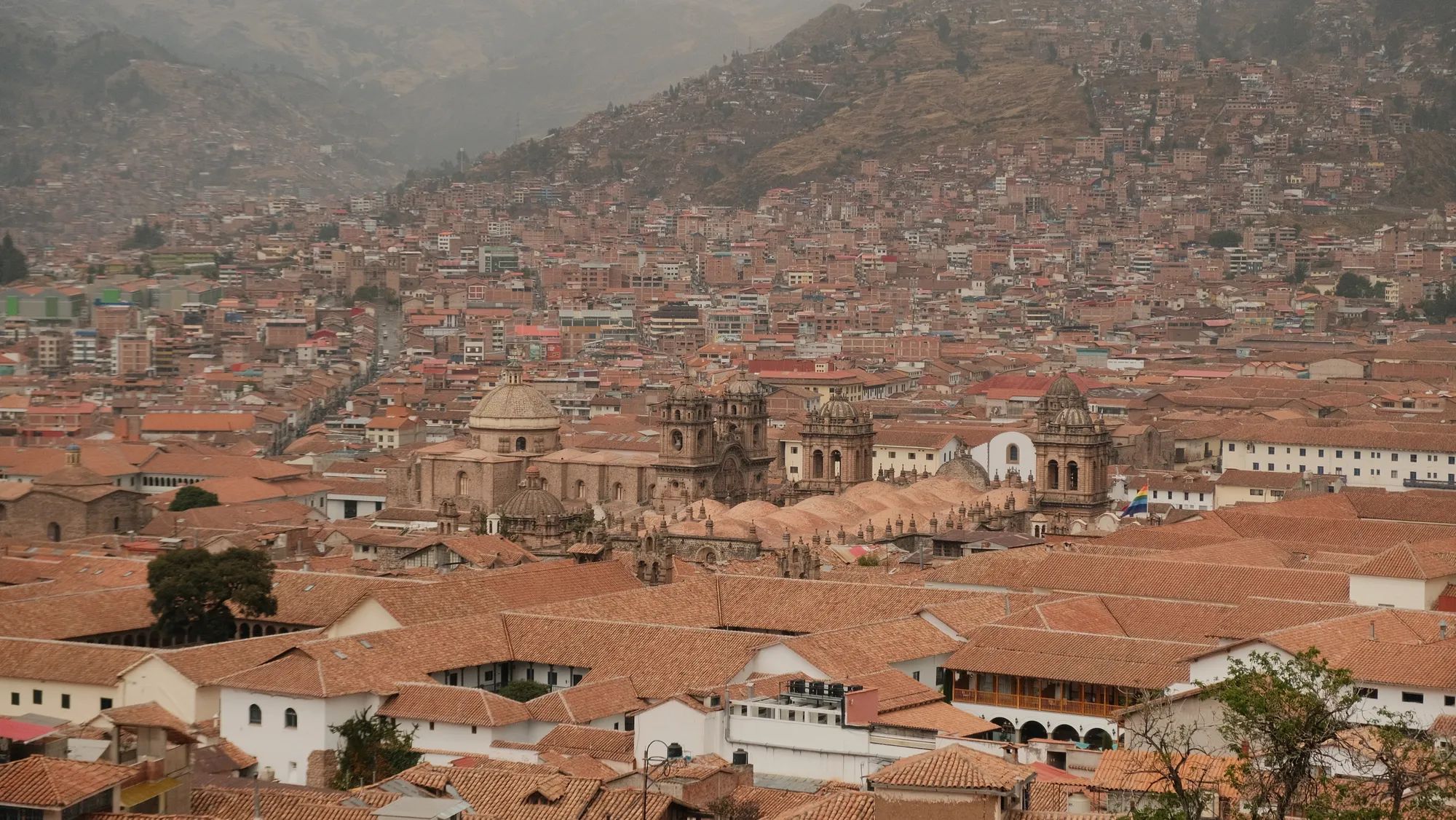
Cusco · Qosqo库斯科 · Qosqo
25 photos
The old Inca capital, colonial stonework and terracotta roofs climbing into the Andes.
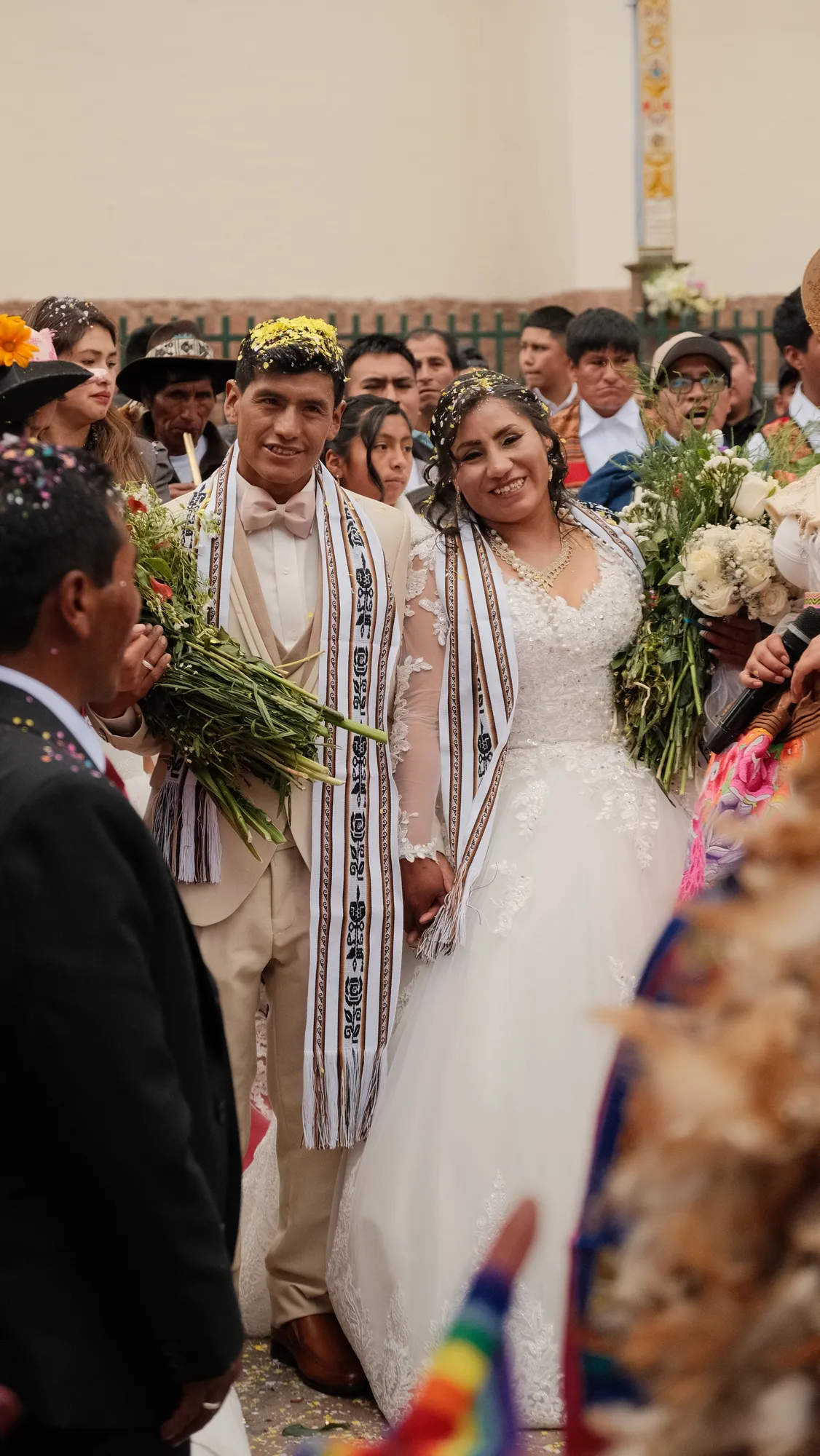
Pisac · P'isaq皮萨克 · P'isaq
19 photos
A market town in the Sacred Valley, its plaza alive with a wedding the day we passed through.
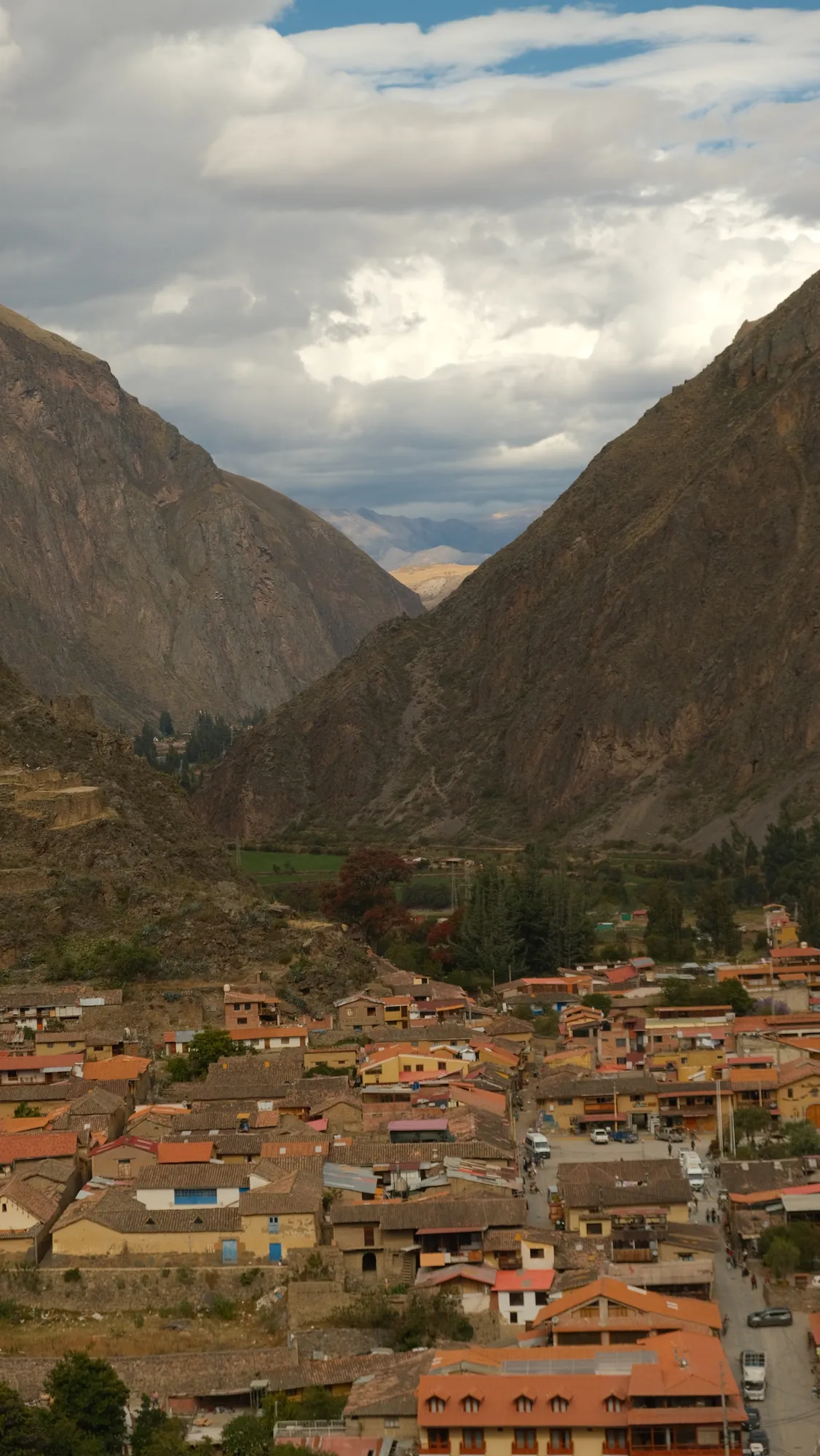
Sacred Valley · Valle Sagrado圣谷 · Valle Sagrado
27 photos
Terraced farmland between Cusco and Machu Picchu, ending in the town of Ollantaytambo.
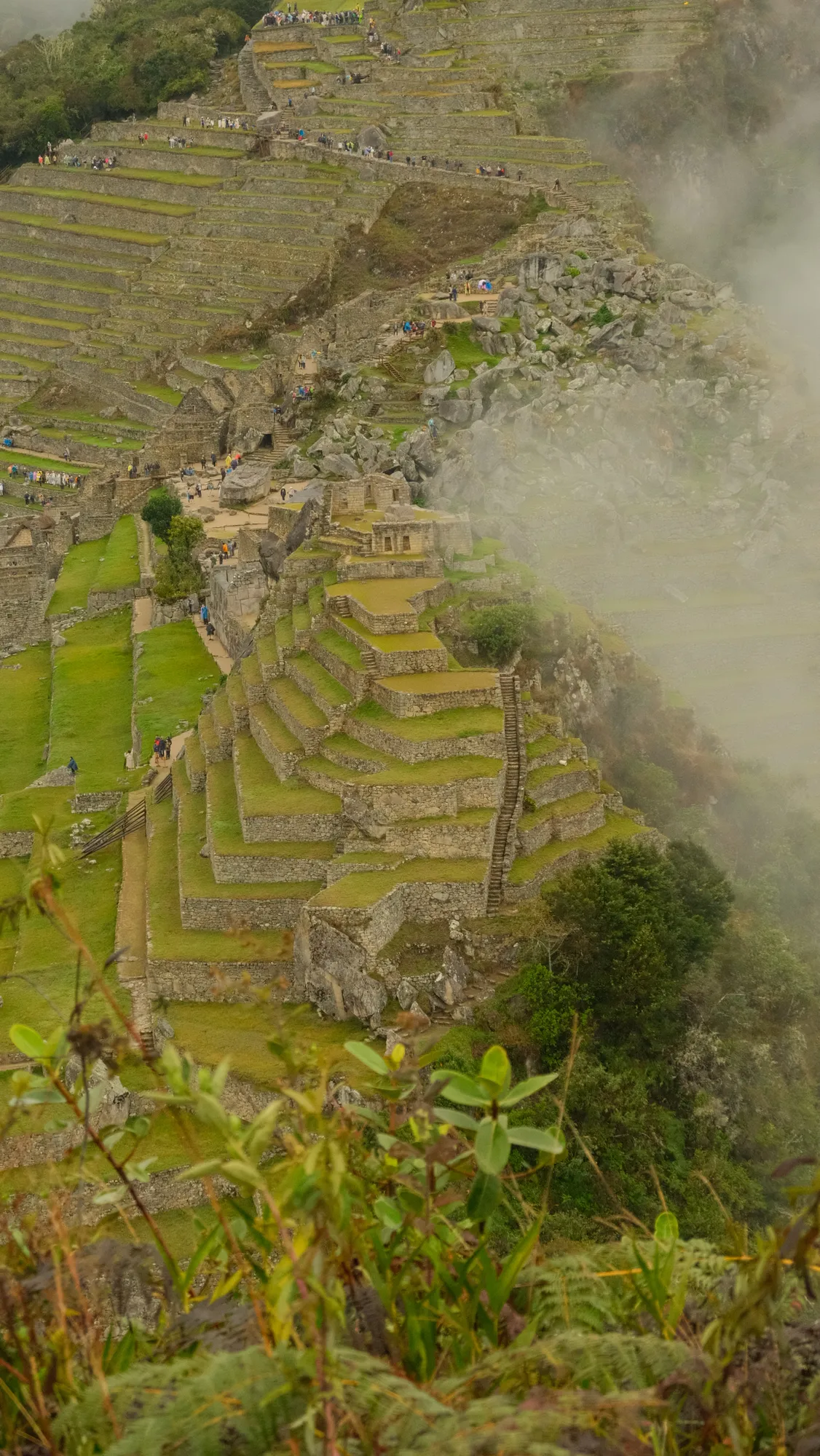
Machu Picchu · Machu Pikchu马丘比丘 · Machu Pikchu
26 photos
The Inca citadel above the Urubamba river, terraces and stonework wrapped in cloud.
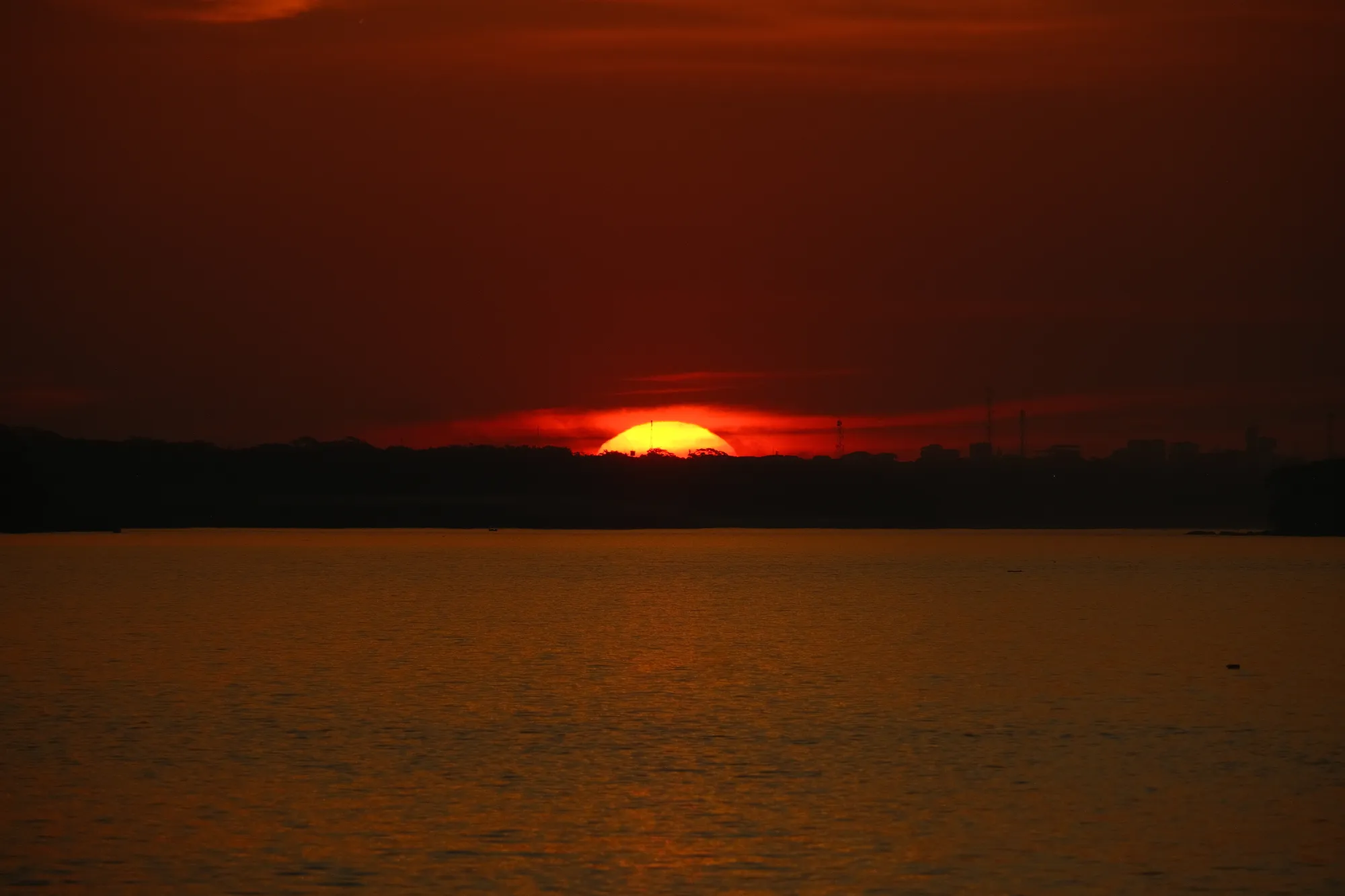
Puerto Maldonado马尔多纳多港 · Puerto Maldonado
38 photos
A gateway to the Amazon, where the Tambopata National Reserve begins.